FAQ
How do you ensure an AI agent does not perform unauthorized or crazy transactions?
Security is our top priority. We implement Programmatic Guardrails and strict risk parameters. You define the agents spending limits, whitelisted smart contracts, and mandatory multi-sig approvals for high-value operations. The agent operates within a sandbox of rules that it cannot bypass, no matter its internal logic.
Can AI agents interact with any blockchain or just specific ones?
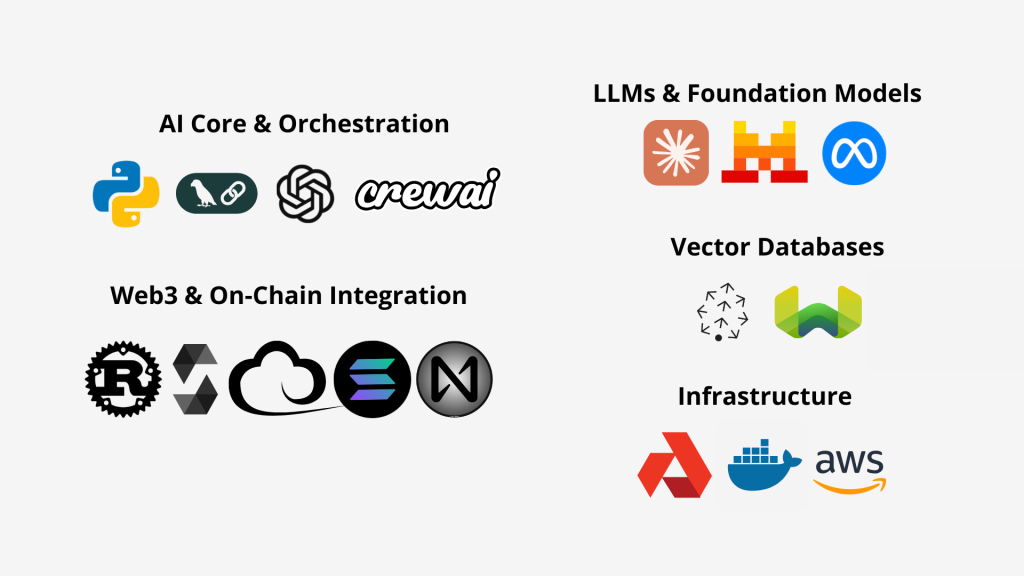
Our agents are chain-agnostic. We build interfaces for EVM-compatible chains (Ethereum, Arbitrum, Base), as well as high-performance networks like Solana and NEAR. Through cross-chain protocols and bridges, we can even develop multi-chain agents that manage liquidity across several ecosystems simultaneously.
How do you prevent LLM “hallucinations” in financial operations?
We use a Retrieval-Augmented Generation (RAG) architecture combined with “Chain-of-Thought” reasoning. Instead of letting the AI guess, we feed it real-time, verified on-chain data and price oracles. Every decision is cross-referenced with hard data before a transaction is ever proposed or signed.
Do I need to provide my own LLM API keys, or do you host the models?
We offer flexible deployment. We can integrate with commercial APIs like OpenAI or Anthropic, or deploy open-source models (like Llama 3 or Mistral) on your own private infrastructure or decentralized compute networks like Akash. This ensures total data privacy and eliminates reliance on a single provider.
What is the difference between a simple Chatbot and an Autonomous Agent?
A chatbot only provides information when prompted. An Autonomous Agent is proactive: it monitors the blockchain 24/7, analyzes shifts in the market or governance proposals, and takes action (signs transactions) based on its goals without needing a human to click “confirm” every time.