
The speculative NFT boom of 2021 – 2022 shaped public perception of the technology. As prices rose and digital collections attracted widespread attention, NFTs became closely associated with images bought in the hope of selling them later at a higher price.
That perception no longer reflects the full range of NFT applications. A new group of companies is using the technology to record ownership of physical collectibles.
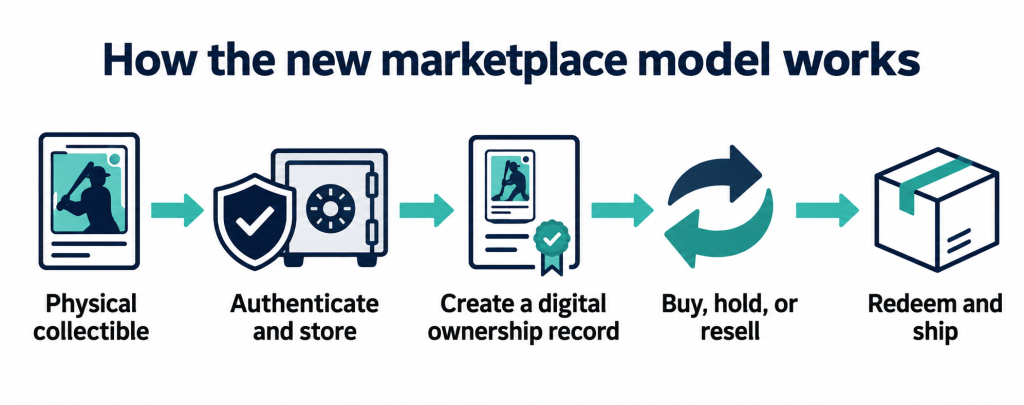
In this model, an NFT represents a specific physical item, such as a graded trading card. The card is authenticated and placed in secure storage. Its owner receives a digital record that can be held, sold, or transferred online. The card stays in the vault until someone asks to have it delivered.
NFT marketplaces still bring buyers and sellers together, but they also has to connect the digital transaction with the physical item. Storage, insurance, payments, ownership records, resale, and shipping become parts of one product.
To see how this model works in practice, we reviewed Collector Crypt, Courtyard, Phygitals, Beezie, and RIP FUN. We also looked at how Solflare, Magic Eden, and Rarible distribute these assets. Each company approaches the market differently, but their products rely on the same basic infrastructure.
The process begins with a real collectible. A platform may buy the item itself, accept it from a collector, or receive it through a specialist partner. Before the item can be sold digitally, the platform must confirm what it is and connect it to a unique record.
The item then moves into a vault, which is secure storage for collectibles. The vault keeps the item safe and insured while it is traded online. Because the card does not move after every sale, ownership can change quickly and the item does not need to be packed, shipped, and checked again each time.
Next, the platform creates a digital ownership record. That record is held in a crypto wallet, although the user may never see the wallet directly. Many platforms create an embedded wallet inside the customer account and allow payment with banking cards. From the collector’s point of view, the process can feel similar to a standard ecommerce purchase.
After the purchase, the owner has several choices. The item can remain in the vault, be listed for sale, or be sold back to the platform when a buyback is available. If the owner requests physical delivery, the platform ships the item and closes the digital claim. This final step prevents the same asset from continuing to trade online after it leaves the vault.
To understand how this model works in practice, we reviewed 5 platforms that connect digital ownership with real collectibles. Each company handles the process differently, from sourcing and storing inventory to payments, resale, and physical delivery.
Collector Crypt combines graded cards, secure storage, randomized packs, buybacks, trading, and shipping. A user opens a digital pack and receives ownership of a real card held by the platform. The user can keep the card, sell it back during the buyback window, or request delivery after it enters vault custody.
The company also offers an Invoiced API for partners. This allows a wallet, marketplace, or consumer app to sell Collector Crypt packs through its own interface. The partner keeps its existing accounts, payments, and storefront. Collector Crypt supplies the pack, selects the card, tracks its status, manages the buyback, and handles shipping.
The settlement process is also designed for companies that do not want to manage onchain payments. Collector Crypt states that pack sales, buybacks, and shipping can be combined in a monthly invoice. This makes the physical inventory and fulfillment system available as an external service.
Courtyard shows how the model works as a complete consumer marketplace. Collectors can send graded cards to its vault or buy cards that are already stored there. Each item is linked to a digital record, so it can be sold without leaving the vault.
The customer account includes an embedded wallet. It holds the ownership record in the background, while familiar payment services allow users to buy with fiat currency. A collector can therefore create an account, purchase a card, see it in a digital collection, and later sell or redeem it without setting up a separate crypto wallet.
Courtyard also supports sales between collectors. This is an important part of the model because a seller can find an independent buyer instead of depending only on a buyback funded by the platform. The marketplace connects discovery, payment, ownership transfer, storage, and delivery in one flow.
Phygitals focuses on a key marketplace problem: where the inventory comes from. Collectors can submit cards to the platform’s vault and receive a digital representation after the item is accepted. The card can then be sold or traded while it remains in storage.
This gives the marketplace two sources of supply. It can offer inventory provided by the platform and add assets submitted by users. The same card can change owners several times without repeated shipping. Physical delivery happens when the final owner chooses to redeem it. Phygitals also supports balances funded with USDC or USDT.
Beezie uses a similar process for graded or authenticated items. After an item enters the vault, the platform creates its digital record and sends it to the user’s registered wallet. Beezie states that storage and insurance are provided through Brink’s facilities.
Its Claw product adds a familiar purchase experience. Users can pay with cards, Apple Pay, Google Pay, crypto, or a Beezie wallet. After opening, they have a limited period to keep the item or accept a swap offer.
The broader point is that the infrastructure can support more than trading cards. Memorabilia, watches, jewelry, and other authenticated goods can follow the same ownership process. Each category needs its own authentication, valuation, storage, and delivery rules, while the digital marketplace gives users a consistent way to access those services.
RIP FUN keeps the physical pack visible throughout the experience. The company stores sealed Pokemon card packs in its warehouse and opens a real pack when the user buys one. The cards are then stored and insured, while ownership is recorded on Base.
The collector can trade the cards online or request delivery. This model keeps the familiar excitement of opening a physical pack and adds a digital ownership layer after the reveal. RIP FUN publishes a 2.5 percent marketplace fee.
Each platform focuses on a different part of the collectibles market, but they follow the same basic model. A physical item is authenticated and stored in a vault. A digital record shows who owns it. The owner can then hold, sell, or transfer the collectible without moving the physical item. Shipping happens only when someone redeems it.
The wallet is an important part of this infrastructure because it holds the digital ownership record. Several platforms use embedded wallets that are created inside the customer account. Others allow users to connect an existing wallet or let a partner manage the account layer. In every case, the goal is similar: users should be able to buy and manage a collectible without dealing with blockchain addresses, gas fees, or complex transaction steps.
The common foundation is therefore a combination of physical custody, digital ownership, payments, trading, and redemption. Embedded wallets connect these services to the user and make the experience feel closer to a familiar marketplace.
Once these services are available through APIs and integrations, users no longer need to visit the original collectibles platform. The same inventory and transaction infrastructure can appear inside a wallet, exchange, or larger marketplace.
Collector Crypt already uses this distribution model. Solflare allows users to open its graded-card packs inside the wallet, while Magic Eden lists the packs on its marketplace. Collector Crypt continues to manage the physical cards, vault storage, and redemption.
OpenSea follows an aggregation model. Its Physical Collectibles category brings together assets issued by Courtyard, Collector Crypt, Phygitals, and other providers. Users can discover and trade these assets through OpenSea, while the original issuer manages storage and physical delivery.
Coinbase may become another distribution channel. On 28 September 2026, the company teased mobile pack opening backed by physical cards, with the option to keep the cards in a vault or have them shipped. As of 1 October, Coinbase had not published a launch date, pricing, odds, or partner details, so the final product model was still unknown.
This changes how tokenized collectibles reach customers. The infrastructure provider can manage inventory and fulfillment, while a wallet, exchange, or marketplace provides the audience and the customer interface.
Although the products look different, they depend on a connected set of services. The custody system records where the physical item is stored. The ownership system links that item to a specific user. The wallet holds the digital record. Payment services accept card or crypto transactions. Marketplace tools manage listings, sales, and buybacks. The redemption system closes the digital claim and starts delivery.
These services must share the same status. A sale should update the owner without changing the vault location. A buyback should return the item to platform inventory. A redemption should stop further sales before the warehouse releases the collectible. If the systems fall out of sync, the platform can show the wrong owner or allow a claim to trade after the item has been shipped.
This coordination is the real product behind a tokenized collectibles marketplace. Blockchain provides a transferable ownership record, but the business also depends on custody, payments, inventory controls, customer support, and fulfillment.
This model is relevant to businesses that work with authenticated goods that retain resale value. A collector platform, specialist retailer, resale marketplace, wallet, or exchange may already control an important part of the process, such as inventory, distribution, or an established customer base.
The product can be built around that existing advantage. A retailer may add digital ownership and resale to its inventory. A wallet can integrate collectible packs through an API. A marketplace can connect its audience to a vault and fulfillment provider.
Before development begins, founders need to decide who authenticates and stores the items, which system records ownership, how users buy and resell them, and what happens when an item is redeemed or a payment fails.
Discuss your marketplace idea
ND Labs can help turn these decisions into a clear product architecture, including the wallet, custody, marketplace, payment, and redemption flows.
It is a marketplace where a digital asset records ownership of a collectible that is authenticated and stored by an issuer or vault partner. The owner can usually trade the digital representation and request physical delivery through the issuer.
The operator must coordinate physical custody, authentication, insurance, redemption, and shipping in addition to wallets, listings, payments, and onchain transfers.
Yes. Collector Crypt documents an invoiced API for partners with their own accounts, payments, and storefronts. Solflare and Magic Eden also show how pack opening can appear inside an existing wallet or marketplace.