
Stablecoin card issuing involves much more than connecting to an issuing API. Before a fintech can launch a card program, it has to decide where users hold their funds, how card transactions access those balances, when conversion happens, who handles compliance and settlement, and how the issuing infrastructure connects with the actual product.
The card is only the visible part.
Behind it sit the wallet or account balance, card issuing infrastructure, transaction logic, compliance flows, backend operations, conversion, settlement, and the interfaces used by customers and operations teams.
The category is also becoming more established. Visa reported more than 160 stablecoin-linked card programs on its network in fiscal Q2 2026, while payment volume across those programs had grown nearly 200% year over year. In FY26 year-to-date, around 17% of stablecoin-linked card volume came from business and commercial card programs.
For product teams, the question is therefore less about whether stablecoin cards can be issued and more about how to structure the program around the issuing infrastructure.
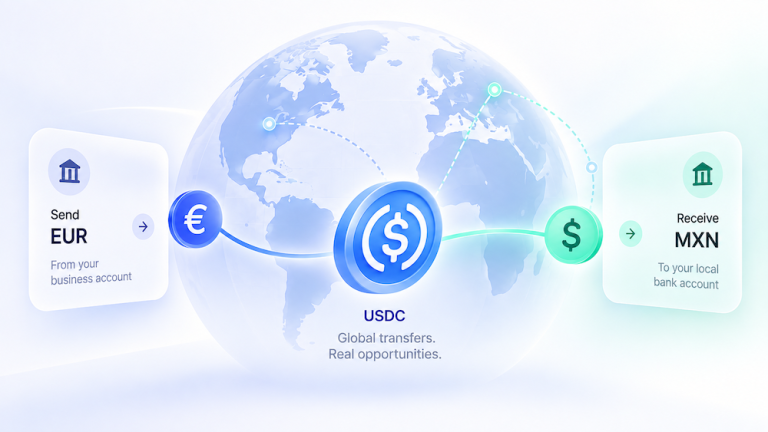
Stablecoin card issuing connects a stablecoin-funded product with traditional card payment rails.
At a high level, the flow looks simple:
Stablecoin balance → card authorization → conversion or funding → card network → merchant
The implementation can look very different from one product to another.
A user may hold funds in a custodial wallet operated by an infrastructure provider. A fintech may already have its own wallet and connect it to a card issuing platform. Another product may use a non-custodial model where the user controls the wallet while card spending is enabled through a separate funding mechanism.
The merchant does not need to receive stablecoins. The transaction moves through traditional card rails while the stablecoin balance sits behind the cardholder experience.
That distinction matters because stablecoin card issuing infrastructure is only one layer of the product. The wallet, transaction logic, compliance flows, backend, card controls and user experience still have to work together.
For a deeper look at those layers, see Stablecoin Card Infrastructure Explained: Issuing, BINs, Settlement & Compliance.

An issuing platform that fits one fintech may be unsuitable for another because geography, cardholder type, wallet architecture, stablecoin support and settlement requirements can differ.
Before evaluating stablecoin card issuing options, it is better to answer the following questions:
A stablecoin card program normally connects several infrastructure layers.
| Layer | Main role |
|---|---|
| Card network | Routes card transactions through established payment rails |
| Issuer / BIN infrastructure | Provides regulated card issuance and network access |
| Processor / issuing platform | Handles authorization, card lifecycle and processing functions |
| Wallet / stablecoin layer | Holds or connects the user’s balance |
| Conversion and settlement | Moves value between stablecoin and payment infrastructure |
| Product layer | Connects cards, balances, backend systems and user experience |
The exact split between these layers depends on the provider.
Some stablecoin card issuing platforms bundle several functions.
Bridge, for example, currently supports consumer and commercial stablecoin-backed card programs, virtual and physical cards, Apple Pay and Google Pay-compatible virtual cards, different wallet funding models, and settlement in fiat or stablecoin.
That can remove a large amount of infrastructure work. It does not automatically create the product around that infrastructure.
Write down the first version of the program in concrete terms before development begins.
That should include:
This gives the issuing provider and the development team a defined product to work against.
Without those decisions, provider selection tends to happen around generic feature lists instead of actual product requirements.
Once the product model is clear, evaluate issuing options against it.
Look beyond whether the provider can create a virtual card.
Useful criteria include:
The issuing infrastructure also has to fit your roadmap.
If you plan to expand across markets, look for stablecoin card issuing infrastructure with multi-country support from the start. A provider that works for the first country but cannot support the next three may create a much larger migration problem later.
Our guide to Stablecoin Card Issuing Providers: What to Compare Before You Choose looks at provider selection in more detail.
This is one of the most important architectural decisions in the project.
If you already operate a wallet, you normally need to connect existing users and balances with the card issuing infrastructure.
That may require:
If you do not yet have a wallet, the wallet and card layer can be designed together.
A third option is to use wallet infrastructure supplied by the card provider.
Bridge illustrates the range of models available today. Its card product supports provider-managed custodial wallets as well as supported non-custodial funding models.
These approaches are not interchangeable. They affect custody, reconciliation, UX and how deeply card issuing becomes part of your own architecture.
If your product already has wallet infrastructure, How to Add Stablecoin Card Functionality to an Existing Wallet covers that scenario separately.
The next step is to map what happens when the cardholder pays.
A simplified flow may look like this:
Stablecoin balance → authorization → balance check → conversion or funding → card network → settlement
But several important questions sit inside that line.
For example:
The user expects one clear transaction.
Your backend may need to reconcile several events to produce it.
How Stablecoin Card Payments Work goes deeper into authorization, conversion and settlement flows.
Stablecoin card issuing also introduces regulated onboarding requirements.
The more useful question is: which party is responsible for each part of the compliance flow?
The issuer or card infrastructure provider may define cardholder verification requirements. A separate compliance provider may perform parts of the verification. Your application still needs to collect the required information, display disclosures, send data to the relevant systems and manage verification states.
That means the product has to handle situations such as:
Compliance therefore affects the product experience directly.
Requirements vary by market, card program and provider, so the exact regulatory model should be confirmed with the relevant regulated partners and legal advisers.
This is where the scope of stablecoin card issuing is often underestimated.
An issuing API gives your systems access to card infrastructure.
It does not automatically create the product your customer uses.
Depending on the project, you may still need to build:
The backend also has to translate provider-specific states into something understandable to both users and operations teams.
A transaction can be authorized, pending, reversed, refunded or settled. Those states have to stay consistent across the issuing platform, your own ledger and the user-facing application.
This is why integrating stablecoin card issuing infrastructure is different from simply connecting an API endpoint.
For the technical side of that integration, see Stablecoin Card APIs: What You Actually Need Beyond Card Issuing.
Testing a successful payment is not enough.
Production systems have to handle the cases where something goes wrong or changes after authorization.
Test scenarios such as:
Reconciliation deserves particular attention.
Cardholder funding, authorization and network settlement do not necessarily happen at the same moment. As a program scales, those timing differences can become an operational issue rather than just a technical detail.
A stablecoin card issuing platform may support a particular country without supporting every wallet model, stablecoin, cardholder type or funding flow that your product needs.
Validate the full configuration, not just the geography list.
The cardholder sees one purchase.
Your infrastructure may see:
Those records need consistent identifiers and reconciliation rules.
Otherwise, even a simple support question can require teams to investigate several systems manually.
Approval at the point of sale does not mean the financial lifecycle of the transaction has finished.
Card authorization, funding, conversion, settlement and reconciliation may happen at different times.
The architecture needs to account for all of them.
Verification is often discussed as a compliance requirement.
For the user, it is part of onboarding.
Document requests, waiting states, failed checks and country restrictions directly affect conversion and activation rates.
A company that already has a wallet does not need to rebuild it just to add cards.
But the issuing layer still needs to connect with existing users, balances, transaction logic, identity data and operational systems.
That is why adding card functionality to an existing wallet should be treated as an integration project, not just a UI feature.
Bridge is one example of how the stablecoin card issuing market is developing.
Its current card offering combines stablecoin infrastructure with issuing capabilities and supports consumer and commercial programs, virtual and physical cards, different funding models and fiat or stablecoin settlement.
For a fintech, this can remove the need to assemble every infrastructure relationship independently.
But even with a provider covering a large part of the issuing stack, the company still needs to decide how the card fits into its own product.
That may include:
This is the layer between issuing infrastructure and the end product.
A card issuer or infrastructure provider supplies the regulated issuing layer.
A development partner connects that infrastructure with the wallet, backend and applications the customer actually uses.
ND Labs works on this product and technology layer.
Depending on the project, that can include:
For companies building from scratch, the wallet and card experience can be designed as one product.
For companies that already have a wallet or fintech platform, the card issuing layer can be integrated into the existing architecture.
The White Label Stablecoin Card Infrastructure service covers both models.
If wallet functionality itself needs to be built or embedded, Wallet as a Service covers that infrastructure layer. For products centered on stablecoin transfers and payment flows rather than card issuing, Stablecoin Payment Infrastructure covers that use case separately.
Stablecoin card issuing requires more than card integration. The product also has to make wallet and digital asset infrastructure usable without exposing unnecessary complexity to the customer.
In ND Labs’ Fan Token Platform & Wallet Infrastructure project, the team built self-custodial wallet infrastructure, passkey-based onboarding, mobile and web applications, operational tooling and a fiat-to-token purchase flow that allowed users to buy digital assets by card without first managing crypto themselves.
It was not a stablecoin card issuing project.
What it demonstrates is experience connecting wallet infrastructure, payment integrations, backend systems and a user-facing product in one architecture.
The same principle applies to stablecoin cards: users should not need to think about wallets, issuing APIs, conversion or settlement every time they pay.
Before development starts, confirm:
If several of these decisions are still open, resolving them before implementation can prevent major architecture changes later.
Stablecoin card issuing is the infrastructure and process that allows a card program to use stablecoin-funded balances while transactions move through traditional card payment rails.
The issuing layer typically works together with wallet infrastructure, conversion, compliance, processing and settlement systems.
Yes.
A development company does not replace a regulated issuer or card infrastructure provider. The provider supplies the issuing infrastructure, while the product connects that infrastructure with wallets, users, balances and applications.
Not necessarily, but the program does need the appropriate regulated issuing infrastructure.
The exact structure depends on the issuer, BIN sponsor, program manager, geography and product model. Legal and regulatory requirements should be confirmed for the markets where the program will operate.
Yes.
If the wallet already manages users, balances and transactions, card issuing infrastructure can be integrated around that architecture.
The scope depends on the wallet model, backend and requirements of the selected provider.
See How to Add Stablecoin Card Functionality to an Existing Wallet for the full integration scenario.
A card program can be designed around supported stablecoin balances such as USDC or USDT.
Actual asset support depends on the issuing infrastructure, wallet model and markets where the program operates.
Yes, where the selected issuing infrastructure supports virtual cards.
For some products, this can simplify the first launch because physical card production and delivery are not part of the initial scope.
There is no universal timeline.
It depends on provider onboarding, geography, compliance requirements, existing wallet and backend infrastructure, and how much of the product layer needs to be developed.
A team adding cards to an existing wallet has a very different scope from a company launching the wallet, issuing integration and user applications together.
Stablecoin card issuing infrastructure is one part of the product.
The rest of the system still has to connect wallet balances, card transactions, backend logic and the user experience.
ND Labs builds the technology layer around card infrastructure, whether you are adding cards to an existing wallet or launching a complete wallet-and-card product. Explore our White Label Stablecoin Card Infrastructure service to see how we support both existing-wallet integrations and new wallet-and-card products.