
During a product discussion with the ND Labs team, the CPO of a US-based sports technology company raised a question that many product teams still have:
“I’ve been in the crypto space for over a decade. I remember when NFTs came out and then just kind of fell off the earth. Is there actually still a market for them?”
He had a point. In 2021, NFTs were everywhere. New collections appeared every day. Brands launched projects because everyone else was doing it. But then prices fell and trading activity slowed down. Many projects disappeared along with their roadmaps and communities.
So, are NFTs dead? NFTs receive much less public attention today, yet the technology is still used in digital collectibles, loyalty programs, gaming, and digital ownership. Often under different names and with a more practical purpose.
The first NFT boom was driven largely by speculation. People bought digital images expecting their prices to increase. Many collections had no working product behind them. Their value depended on attention, scarcity, and the hope that another buyer would pay more later.
This model could only work while new buyers continued to enter the market.
The market is much smaller and more cautious now. Activity has not disappeared. According to the DappRadar Q3 2025 industry report, more than 18 million NFTs were sold during the quarter, generating $1.6 billion in trading volume. These numbers should be treated carefully. NFT trading can change significantly from one quarter to another. High volume also says little about whether a particular product will attract users.
However, the figures show that the infrastructure is still active.
People continue to create, hold, and exchange blockchain-based assets, but the reasons for doing so have changed.
The term NFT still carries associations from the market boom. For many people, it means expensive digital pictures, speculation, external crypto wallets, seed phrases, and network fees. These associations can create hesitation before the user understands what the product actually offers.
This is why many product teams describe the asset through its purpose. The user may see:
The asset may still be issued on a blockchain. The product simply uses a name that explains why someone would want it.
The same approach affects the user experience. A person signs up with an email address or Google account. An embedded wallet is created automatically. Payment is made by card. The asset appears in a familiar “My Collection” section.
A sports fan wants access to exclusive content. A gamer wants an item they can use. An event visitor wants a pass. The technical format usually comes later.
Products created for an experienced Web3 audience may still use the word NFT openly. Mainstream applications often keep the technology in the background.
In 2026, an NFT is a way to issue a unique or limited digital asset and record its ownership. The value comes from what the asset allows its owner to do.
A digital collectible may provide access to private content. A membership pass may unlock an event or a discount. A game item can belong to the player and, where the product permits it, be transferred or sold.
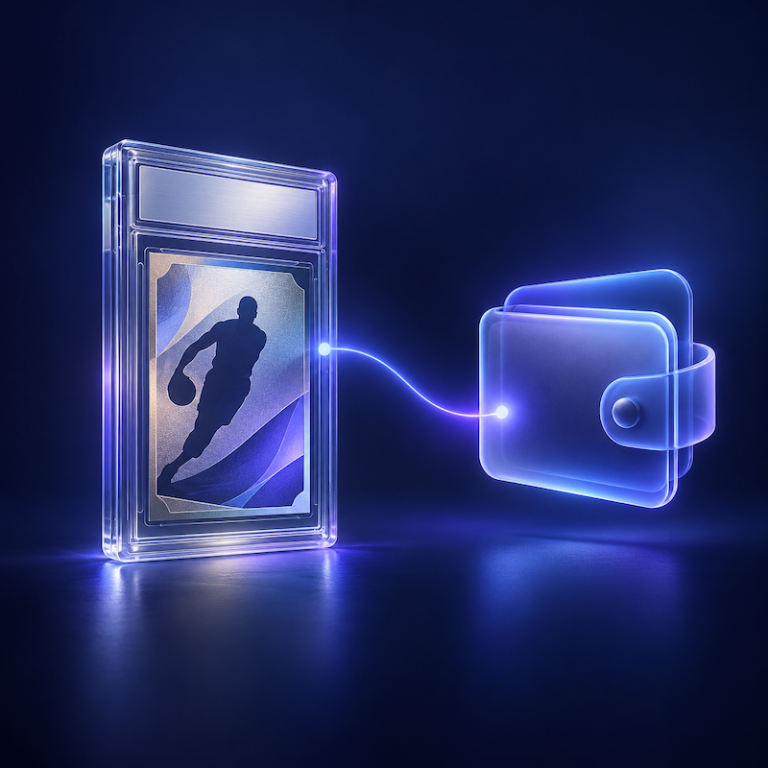
Some products connect the digital asset with a physical object. A token may confirm the origin of a signed jersey, for example, or allow its owner to redeem a physical collectible.
Loyalty is another possible use case. A 2025 study published in the Journal of Retailing and Consumer Services found that NFT-based loyalty programs can create emotional, social, and identity-related value for customers.
NFTs and real-world assets are sometimes discussed as though the terms mean the same thing, but they describe different concepts.
An NFT can represent a fully digital item, such as a player card or an in-game asset. It can also be connected to a physical object, such as a ticket, a signed jersey, or another collectible.
A digital picture of an athlete remains a digital asset. It becomes connected to a real-world asset when the token gives its owner a clear right to claim, verify, or transfer a physical item.
For example, a token may be linked to a signed jersey stored by a club or marketplace. Its owner may be able to verify the jersey’s origin, request delivery, or transfer the right to receive it to another person.
This model also requires clear rules. Who stores the jersey? Who is responsible for shipping it? What happens if it is lost or damaged? The blockchain can record who owns the token and how it was transferred. The company behind the product must still store the physical item and deliver what was promised.
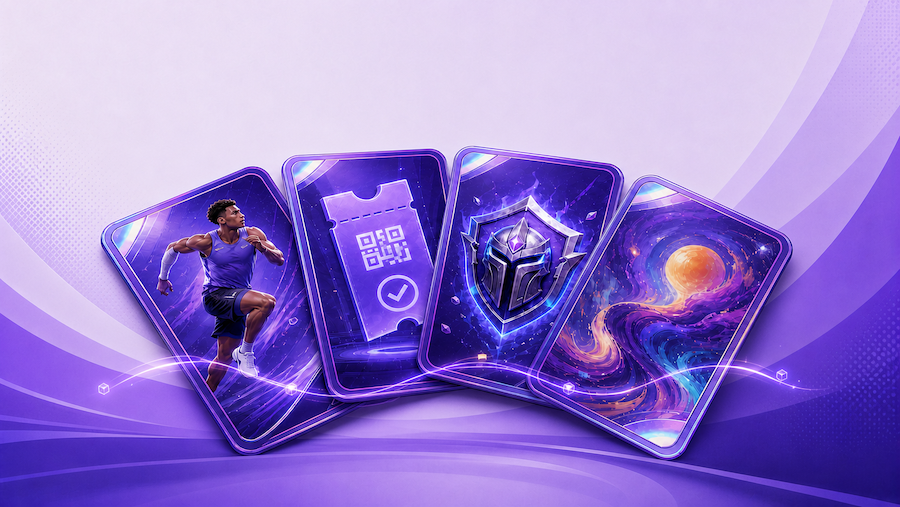
Sports products naturally lend themselves to collecting. Fans are already collecting cards, jerseys, autographs, tickets, photographs, and objects related to iconic moments in sports. A digital player card can provide a natural continuation of this behavior within an application.
A card without these features may still appeal to collectors. Its success would depend greatly on the popularity of the athlete, the quality of the design, the distribution model, and the strength of the fan base.
Utility gives the product team more ways to keep fans engaged after they receive or purchase the card.
A single card can evolve as well. It may display updated statistics, unlock features based on activity, or provide a new benefit when an athlete reaches a major milestone. Certain information may live on-chain while other portions remain off-chain.
A conventional database already handles many digital asset scenarios well.
Consider a collectible that will always remain inside one application. Users cannot transfer it. Its ownership history has no value. It provides no rights outside the platform. One company controls every operation and every participating party already trusts that company.
Blockchain adds cost and technical complexity to this setup. The customer may receive almost the same experience either way.
The same applies when tokenization is added mainly for marketing. Calling an item an NFT rarely creates long-term demand.
Sometimes the answers lead to an NFT. Sometimes they lead back to a regular database.
NFTs continue to exist. For product teams, the more useful question concerns the asset itself:
“What will owning this digital object allow the user to do?”
A clear answer gives the team something to design, build, and test.
ND Labs helps companies evaluate Web3 use cases, design embedded-wallet experiences, and build digital asset products around real user behavior.
If you are considering digital collectibles, tokenization, or a Web3 layer for an existing product, contact the ND Labs team to discuss the most practical way to test the idea.