When comparing trust wallet vs metamask, most people are focused on a simple question: Which wallet should I use? But there’s a deeper angle worth exploring.
At a high level:
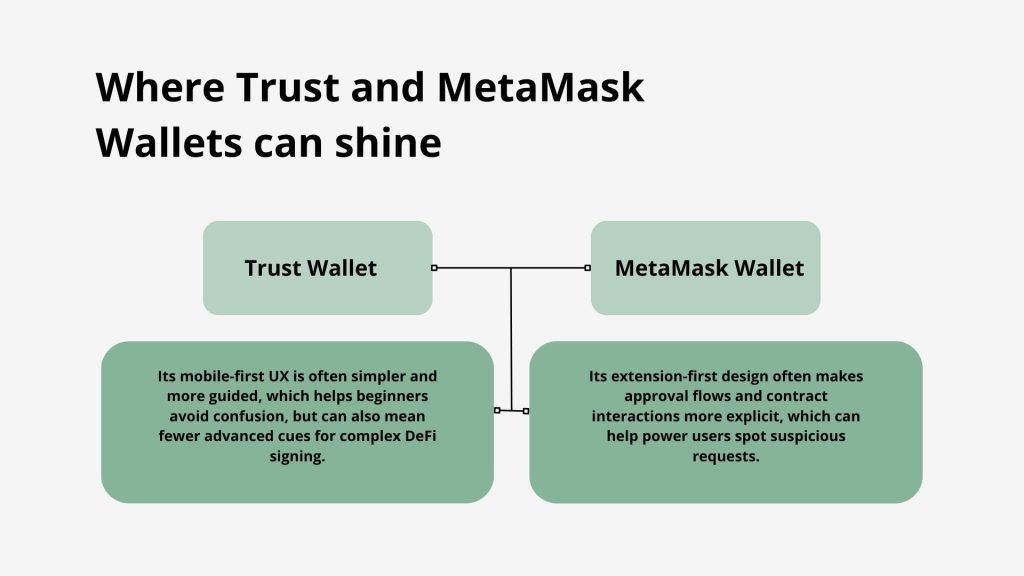
Trust Wallet-style = mobile-first, multi-chain consumer wallet with staking and NFT focus.
MetaMask-style = Ethereum-first Web3 onboarding optimized for extensions, dApp signing, and approvals.
Building a wallet product (not just choosing one)? Start here:
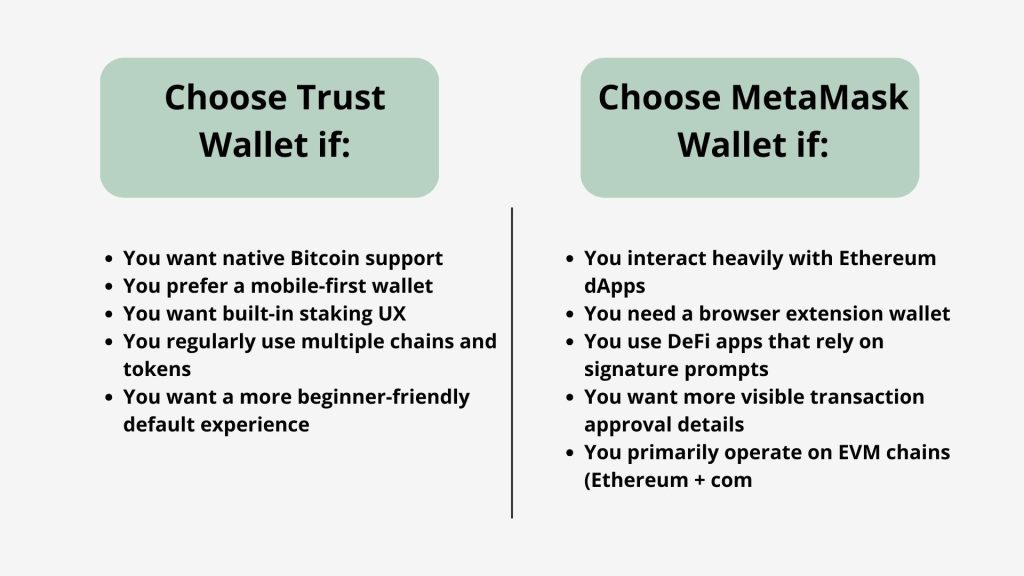
If you’re searching for Trust Wallet or Metamask, here’s the fastest way to choose.
Trust Wallet vs MetaMask — Feature Comparison
Feature
Trust Wallet
MetaMask
Chain coverage approach
Multi-chain, consumer-centric
Ethereum-first, EVM-centric
Primary interface
Mobile app
Browser extension + mobile
dApp access
Built-in dApp browser
Extension connector + WalletConnect
Swaps
In-app swaps (provider-based)
In-app swaps (EVM)
Staking/NFT UX
Native staking + NFT display
NFT display; limited staking UX
Beginner friendliness
High
Medium
WalletConnect support
Yes
Yes
Best for
Beginners + multi-chain
Web3 + DeFi workflows
Trust Wallet vs MetaMask Security
Security debates get noisy fast. Both wallets are self-custody tools, so the biggest risks usually come from phishing, approvals, and seed phrase mistakes, not “hacks of the wallet app.”
Is MetaMask Safer Than Trust Wallet?
It depends — because security is mostly about your threat model and behavior.
When people compare Trust Wallet vs. Metamask fees or Trust Wallet vs. Metamask gas fees, two categories matter:
Network gas fees. Gas is set by the blockchain network (Ethereum, BNB Chain, etc.). The wallet doesn’t “own” gas pricing—though it may let you adjust speed/cost settings.
Service/provider fees. Fees can appear via: swaps (routes + liquidity sources), fiat on-ramps, third-party providers inside the app
In practice, the fee difference usually comes from swap routes/on-ramp providers, not the wallet itself. Always review the quote breakdown in-app before confirming a swap or purchase.
Can you use both wallets together?
Yes—you can use both wallets together, and for many people it’s actually the smartest setup.
Here are a few practical ways users combine Trust Wallet vs MetaMask without friction:
Use Trust Wallet for holding + multi-chain basics: Keep long-term assets, hold Bitcoin, and manage a wider set of chains in a mobile-first interface.
Use MetaMask for DeFi + dApp-heavy activity: Connect to Ethereum apps, sign transactions, and manage approvals in a workflow built for Web3 interactions.
Separate “hot” vs “daily” usage: Some users keep a smaller spending balance in MetaMask for DeFi, while keeping the larger balance in Trust Wallet for simpler mobile storage.
Use WalletConnect where supported: Many dApps let you connect using WalletConnect, so you can sometimes connect either wallet depending on the app and chain.
Important note: You can import the same recovery phrase into both wallets, but that reduces compartmentalization. A safer approach is to keep separate seed phrases for each wallet so a mistake in one environment doesn’t automatically expose everything.
If You’re Building: Trust Wallet-Style vs MetaMask-Style Wallet Model
If you’re building, the real question is: which model should you build?
Choose Trust-style if your roadmap includes multi-chain consumer UX, staking, and NFTs
Choose MetaMask-style if your roadmap centers on Web3 onboarding, approvals, and extension ecosystems
Building a product for the mobile-first audience? Trust Wallet’s UX is the gold standard for multi-chain users. Check our article “Trust Wallet Clone Script” for a fast and secure market entry.
I’m a top professional with many-year experience in software development and IT. Founder and CEO of ND Labs specializing in FinTech industry, blockchain and smart contracts development for Defi and NFT.