

DeFi (decentralized finance) is a way to access financial services—trading, lending, borrowing, and earning yield—using blockchain-based apps instead of banks or brokers.
In this guide, we explain what DeFi is, how it works, where the risks are, and how teams can build secure DeFi products that users actually trust.
The history of DeFi can be traced back to the early days of blockchain technology. Initially, blockchain technology was used to create cryptocurrencies, such as Bitcoin and Ethereum. As the technology developed, developers began to explore other applications of blockchain technology, such as creating decentralized applications (dApps) and decentralized exchanges (DEXs). These applications allowed users to access financial services without relying on a centralized third party. This was a major breakthrough in the world of finance, as it allowed users to access financial services without having to trust a centralized entity.
DeFi started gaining real traction with Ethereum-based protocols that introduced stablecoins, decentralized lending, and automated market makers (AMMs). Over time, the ecosystem expanded into derivatives, bridges, liquid staking, and more — creating a full “on-chain finance” stack that anyone can access with a wallet.
Today, DeFi continues to evolve quickly, shaped by new security patterns, changing user expectations, and ongoing regulation.
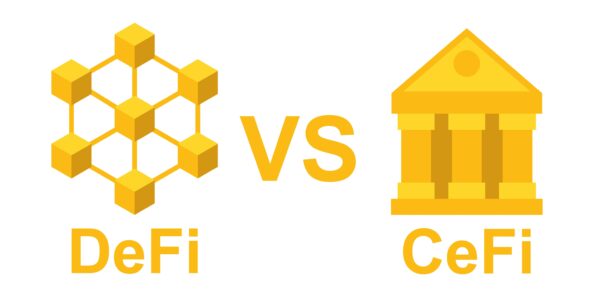
Centralized Finance (CeFi) is the traditional financial system that has been in place for many years. It is based on a centralized system, which means that all transactions and services are managed by a single entity, such as a bank or other financial institution. This centralized system is designed to provide users with access to financial services, such as loans, investments, and insurance.
In contrast, DeFi is based on a decentralized system, which means that all transactions and services are managed by a distributed network of computers. This decentralized system is designed to provide users with access to financial services in a trustless and secure manner.
| DeFi | CeFi |
|---|---|
| You control funds via your wallet | A company controls funds on your behalf |
| Runs on smart contracts | Runs on internal systems + compliance |
| Transparent on-chain activity | Limited transparency |
| Higher self-custody responsibility | More customer support, often easier UX |
| Risks: smart contract exploits, approvals, phishing | Risks: custody, freezes, insolvency |
Both DeFi and CeFi can be useful, but they optimize for different trade-offs. CeFi usually offers simpler UX and support, while DeFi focuses on transparency and user control, at the cost of higher self-custody responsibility.
Bitcoin is a cryptocurrency and network mainly used for payments and as a store of value. DeFi is a broader category of on-chain financial apps (DEXs, lending, borrowing, derivatives) that usually run on smart contracts and are accessed through a wallet.
Some of the key differences between Bitcoin and DeFi include:
At its core, DeFi gives users direct access to financial tools without requiring permission from a bank or broker. It enables trading, lending, borrowing, and on-chain yield strategies, all managed through a crypto wallet.
DeFi offers users access to a wide range of financial services, such as lending, borrowing, trading, and insurance. These services are provided in a trustless and secure manner, as they are built on blockchain technology. This technology ensures that all transactions are immutable and transparent, allowing users to have full control over their funds.
Additionally, DeFi does not require users to pay fees to a centralized intermediary, which makes it more cost-effective than traditional financial services. Furthermore, DeFi can be used to access a variety of financial products, such as derivatives, stablecoins, and synthetic assets. This allows users to diversify their portfolios and gain exposure to a variety of asset classes. Moreover, DeFi platforms are open to anyone, regardless of their geographical location or financial status. This makes it an attractive option for people who may not have access to traditional financial services.
DeFi works through smart contracts—programs deployed on a blockchain that automatically execute financial actions. For example, a lending protocol can accept collateral, issue a loan, calculate interest, and liquidate positions if risk thresholds are breached.
Users interact with these contracts through a crypto wallet. When a user signs a transaction (for example, approving a token or swapping assets), the wallet sends the request to the blockchain, and the smart contract enforces the rules.
If you’re exploring product development, we also cover this topic here: smart contract development.
Today, DeFi often runs across Layer 2 networks and multiple chains. Many apps use aggregators to route swaps or yields across protocols to improve pricing and reduce fees.
Blockchain
Blockchain is the underlying technology that enables DeFi protocols to function, as it provides a secure and immutable platform for transactions.
Smart Contracts
Smart contracts are self-executing contracts that are written in code and stored on the blockchain. These contracts are designed to execute automatically when certain conditions are met.
Decentralization
Decentralization is a key characteristic of DeFi. It means that DeFi applications operate on a distributed network of computers rather than on a single, centralized server. This allows for greater security and transparency, as there is no single point of failure. It also eliminates the need for intermediaries like banks, which can make the system more accessible for users.
A smart contract in DeFi is a self-executing contract with the terms of the agreement written directly into code. It is stored on a blockchain, and it can be programmed to automatically execute actions when certain conditions are met.
In the context of DeFi, smart contracts are used to automate various financial processes, such as lending and borrowing, trading, and more. For example, a lending platform might use a smart contract to automatically execute the loan agreement, including the interest rate, the repayment schedule, and the collateral. Once the smart contract is deployed on the blockchain, it will automatically execute the terms of the agreement without the need for intermediaries or intermediation.
Smart contracts can also be used to create decentralized exchanges (DEXs) which are platforms that allow users to trade digital assets in a peer-to-peer fashion without the need for a central authority.

DeFi offers several benefits over traditional financial services.
Open
DeFi projects are open-source, meaning their code is publicly available for anyone to review and contribute to. This allows for greater transparency and trust in the system.
Pseudonymous
This means that users can access DeFi services without having to provide any personal information, and they can access these services from anywhere in the world.
Flexible
Smart contracts can be customized to suit the specific needs of a given situation. They can be programmed to execute different actions based on different conditions, making them highly flexible.
Fast
Smart contracts can be executed much faster than traditional contracts, as they do not require intermediaries or intermediation.
Transparent
As smart contracts are stored on a blockchain, which is a decentralized, digital ledger that records transactions across a network of computers, it allows for greater transparency, as all parties involved can see the details of the contract and the actions that have been executed.
Programmability
Smart contracts can be set to execute different actions based on different conditions, making them highly programmable.
Immutability
Once a smart contract is deployed on the blockchain, it cannot be altered. This ensures that the terms of the contract are immutable, and it prevents any malicious actors from changing the contract’s terms.
Interoperability
DeFi applications are designed to be interoperable, meaning they can interact with one another. This allows for the creation of more complex financial products and services.
Permissionless
Smart contracts can be accessed and executed by anyone, without the need for permission.
With DeFi, users can access a wide range of financial services such as lending, borrowing, trading, and insurance without the need for traditional intermediaries like banks.
Send money around the globe

DeFi makes it possible to send money around the globe in a decentralized way. Decentralized exchanges (DEXs) allow for the exchange of cryptocurrencies without the need for a centralized intermediary, which means that anyone with an internet connection can participate in the global economy. For example, users can exchange one cryptocurrency for another or buy and sell tokens for fiat currency on a DEX.
Access and use the stablecoins
DeFi can help users access stable currencies through the use of stablecoins. Stablecoins are a type of cryptocurrency that are pegged to the value of a fiat currency, such as the US dollar, or to a basket of assets like gold or other cryptocurrencies. This means that the value of a stablecoin remains relatively stable, even when the value of other cryptocurrencies fluctuates.
Borrow and lend money
Users can deposit their cryptocurrency assets as collateral on the lending platform. Once the assets are deposited, the user can then borrow money in the form of another cryptocurrency or stablecoin.
The borrowed funds can be used for any purpose, such as making a purchase or trading on a decentralized exchange. Once the borrowed funds are repaid, the collateral is returned to the user. On the other hand, users can also lend their cryptocurrency assets and earn interest on them by staking or lending them on the lending platforms.
Some DeFi platforms are also exploring new ways to enable lending without the need for collateral, through the use of credit scoring and lending protocols.
Start Crypto Savings
DeFi also offers users the ability to start crypto savings. This means that users can store their funds in a secure, digital wallet and earn interest on their holdings. This is a great way for users to grow their portfolio without having to worry about the volatility of the cryptocurrency market.
Trade Tokens
With DeFi, users also have the ability to buy and sell tokens quickly and securely. This is a great way to access liquidity and grow their portfolio.
Fund Your Ideas
With DeFi, users can raise funds for their projects quickly and securely. This is a great way to get ideas off the ground without relying on traditional financing.
Manage Your Portfolio
DeFi allows users to track their investments, monitor their performance, and make changes to their portfolio as needed. This is a great way to stay on top of the investments and maximize the returns.
Many of these flows start inside a wallet. If your product needs swaps, staking, or lending UX, explore our DeFi wallet development services.
These are some of the key areas and components that make up the DeFi ecosystem.
Asset management
Asset management is the process of managing the assets of an individual or organization. This involves monitoring and maintaining the value of the assets, as well as making decisions about when and how to invest in new assets. Asset management can be done manually or through the use of automated systems, such as portfolio management software.
Compliance and KYT
Compliance involves ensuring that all transactions are in line with the applicable laws and regulations. KYT involves verifying the identity of the parties involved in a transaction and ensuring that the transaction is legitimate.
DAOs
Decentralized Autonomous Organizations (DAOs) are organizations that are run by a set of rules encoded into a computer program. They are designed to be self-governing, with no need for a central authority.
Data and analytics
Data and analytics are essential for asset management. They provide insights into the performance of assets, allowing investors to make informed decisions about their investments.
Derivative DApps
Derivative DApps are decentralized applications that allow users to trade derivatives, such as futures, options, and swaps. They are powered by blockchain technology and provide a secure, transparent, and efficient platform for trading derivatives.
Payment DApps
Payment DApps are decentralized applications that enable users to make payments using cryptocurrencies. They provide a secure and efficient way to transfer funds, as well as a way to store and manage digital assets.
Prediction Market DApps
Prediction market DApps are decentralized applications that allow users to bet on the outcome of events. They provide a platform for users to trade derivatives based on the results of events, such as elections or sports matches.
Wallet DApps
Wallet DApps are decentralized applications that enable users to store, send, and receive cryptocurrencies. It allows users to store and manage digital assets in a secure and efficient way.

Tokens
Tokens are digital assets that are used to represent value on a blockchain. They can be used to represent a variety of assets, including currencies, commodities, and securities.
Stablecoins
Stablecoins are cryptocurrencies that are designed to maintain a stable value. They are backed by a reserve asset, such as a fiat currency, and are designed to provide a more stable and reliable form of digital currency.
Lending and Borrowing
Lending and borrowing are two important aspects of DeFi. They allow users to borrow and lend digital assets in a secure and transparent manner, enabling them to access short-term liquidity and earn interest on their investments. Lending and borrowing can be done through decentralized protocols, which are open-source and trustless. In addition to providing users with access to short-term liquidity, DeFi lending and borrowing protocols also facilitate the creation of more complex financial products, such as yield farming and options trading.
Decentralized Exchange
Decentralized exchanges are platforms that enable users to trade digital assets in a secure and transparent manner. They are powered by blockchain technology and provide a secure and efficient way to trade digital assets.
Flash Loans
Flash loans are short-term loans that are provided for a single transaction. They are designed to provide users with access to capital quickly and efficiently, without the need for long approval processes or extensive paperwork. Flash loans are typically used for short-term investments, such as arbitrage opportunities, or for hedging against market volatility.
Insurance
Insurance products cover specific risks, such as smart contract exploits, depegs, or other losses depending on the policy. Coverage varies widely, so users should read terms carefully and treat insurance as risk reduction, not a guarantee.
DeFi is made of building blocks like wallets, DEXs, lending markets, stablecoins, oracles, DAOs, and bridges. Most real user journeys combine several of these components in one flow.
Before using any DeFi protocol, it’s worth doing a quick safety check. Here are practical criteria many teams and users review:
Entering the world of DeFi can seem daunting at first, but with a few simple steps, anyone can get started. Here is a step-by-step guide to entering DeFi:
Step 1: Setting Up Your DeFi Wallet
The first step to entering DeFi is to set up a DeFi wallet. A DeFi wallet is a digital wallet that allows users to store, send, and receive digital assets. It is important to choose a secure and reliable DeFi wallet, as it will be used to store and manage digital assets. When selecting a wallet, it is important to consider the fees associated with the wallet, the security features, and the customer support offered. Additionally, it is important to make sure that the wallet supports the tokens that the user wants to purchase.
Tip: Look for wallets that support transaction simulation, clear risk warnings, and easy token approval management—these features help users avoid common scams and approval-based drains.
If you’re new to self-custody, start here: what is a non-custodial wallet.
Step 2: Funding Your Wallet and Buying Tokens
Once the wallet is set up, the next step is to fund it and purchase tokens. This can be done by transferring digital assets from a centralized exchange, such as Coinbase or Binance, or by purchasing tokens directly from the DeFi wallet. It is important to research the tokens before purchasing, as some tokens may be more volatile than others. Additionally, it is important to consider the fees associated with the purchase, as well as the liquidity of the token.
Step 3: Learning the ‘How-To’ of DeFi Investments — Staking, Lending and Borrowing, Farming, and Mining
Once the wallet is funded and tokens are purchased, the next step is to learn the ‘how-to’ of DeFi investments. DeFi investments can include staking, lending and borrowing, farming, and mining. Each of these investments has its own unique characteristics and risks, so it is important to research and understand the different types of investments before getting started. Staking involves locking up tokens in order to earn rewards, while lending and borrowing allows users to loan out tokens and earn interest. Farming involves providing liquidity to a pool and earning rewards, while mining involves providing computing power to a network and earning rewards.
Step 4: Exploring DeFi Projects
The final step is to explore DeFi projects. There are a variety of DeFi projects available, and each one provides its own unique features and benefits. It is important to research the different projects and find one that best fits the needs and goals of the investor. When researching projects, it is important to consider the fees associated with the project, the security features, and the customer support offered. Additionally, it is important to consider the project’s track record and the team behind it.

Approval risk: Many DeFi apps require token approvals. If a user approves a malicious contract (or gives an unlimited allowance), funds can be drained later.
Bridge and cross-chain risk: Bridges and cross-chain messaging layers have historically been major attack targets. Treat cross-chain transfers as higher risk than same-chain activity.
MEV and sandwich attacks: On-chain trades can be reordered or exploited, especially on low-liquidity pairs. Slippage controls and private routing can reduce exposure.
Participating in DeFi can be a rewarding experience, but it is important to understand the risks associated with it.
Smart Contract Risks
DeFi relies on code-based smart contracts; if there is a bug or error in the code, it can lead to unintended consequences or loss of funds.
Liquidity Risk
DeFi platforms can suffer from a lack of liquidity, which can cause price slippage and difficulty in executing trades.
Market risks
DeFi is a new and rapidly evolving space with high market volatility, which can result in significant losses.
Regulatory risk
DeFi operates in a largely unregulated space, which means there may be a risk of legal consequences or loss of funds due to changes in laws and regulations.
Volatility
Volatility can cause tokens to lose value, and fluctuating yields can cause returns to be unpredictable, making it difficult to plan for the future.
Hacking risks
Cryptocurrency exchanges and DeFi platforms are vulnerable to hacking and cyberattacks, which can result in loss of funds.
Dying projects
Dying projects can cause users to lose their investments if the project fails to gain traction, leaving users with no way to recoup their losses.
Scams can occur when malicious actors take advantage of users’ inexperience, offering fake investments or using other tactics to steal funds.
In practice, staying safe in DeFi comes down to using trusted protocols, limiting token approvals, double-checking links and signatures, and understanding liquidation mechanics. For teams building DeFi products, safer wallet UX (simulation, warnings, approvals management) and clear risk disclosures make a measurable difference.
DeFi, or Decentralized Finance, is a rapidly growing sector of the cryptocurrency industry. With the rise of Ethereum and other blockchain-based projects, DeFi has become a popular way to store and manage digital assets. The potential for DeFi to revolutionize traditional finance is immense, and the possibilities for its future are expansive. DeFi is capable of creating a more open, transparent, and secure financial system that is accessible to everyone. As the technology continues to evolve and more projects enter the space, DeFi is sure to make a major impact on the future of finance.
Want a practical 2026-focused view? See DeFi in 2026: risks, MiCA & wallet UX requirements.

DeFi keeps evolving, but the core idea remains the same: open financial tools users can access directly from a wallet. If your team is planning a DeFi product, we can help with architecture, smart contracts, security, and safer transaction UX.
DeFi (decentralized finance) is a way to use financial services like swapping tokens, earning yield, lending, and borrowing through blockchain apps instead of banks. Users interact through a crypto wallet, and smart contracts execute the rules on-chain.
A DeFi wallet is a crypto wallet that lets users connect to DeFi apps, sign transactions, and manage token approvals. It’s usually non-custodial, meaning users control their keys and funds.
DeFi rules vary by country. Many DeFi protocols are permissionless software, but users and businesses still need to follow local laws, tax rules, and compliance requirements where applicable.
DeFi can be safe when used carefully, but risks are real: smart contract bugs, phishing, malicious approvals, bridge exploits, and market volatility. Using trusted protocols and good wallet security practices makes a big difference.
Token approvals (allowances) give a smart contract permission to move your tokens. If you approve the wrong contract—or approve an unlimited amount—funds can be drained later. It’s safer to approve only what you need and revoke unused approvals.
Slippage is the difference between the expected price and the final execution price of a swap. It often increases in low-liquidity markets or during volatility. Setting reasonable slippage limits helps reduce losses.
Impermanent loss is a potential loss liquidity providers can experience when token prices change compared to simply holding the tokens. It depends on volatility and pool mechanics, and it can become permanent when liquidity is withdrawn.
Liquidation happens when a borrower’s collateral value falls below a required threshold. The protocol can sell collateral to repay the loan. Understanding collateral ratios and liquidation prices is critical before borrowing.
MEV (maximal extractable value) describes how traders or bots can profit by reordering or inserting transactions. A sandwich attack is when a bot places trades around your swap to worsen your execution price. Slippage controls and safer routing can reduce exposure.
TVL (total value locked) is a metric that estimates how much value is deposited in a DeFi protocol (for example, in liquidity pools or lending markets). It can indicate scale, but it doesn’t guarantee safety.
Bridges move assets between blockchains or Layer 2 networks. They’re often more complex than same-chain transactions, which historically makes them a frequent target for attacks. Users should treat cross-chain transfers as higher risk.
A secure DeFi wallet typically includes safe transaction signing, clear risk warnings, approval management, smart contract security practices, and strong UX for swaps, staking, and lending flows. If your team is building one, explore our DeFi wallet development services.
Before using any DeFi app, run through this quick checklist. It takes a minute and can save a lot of money and stress.