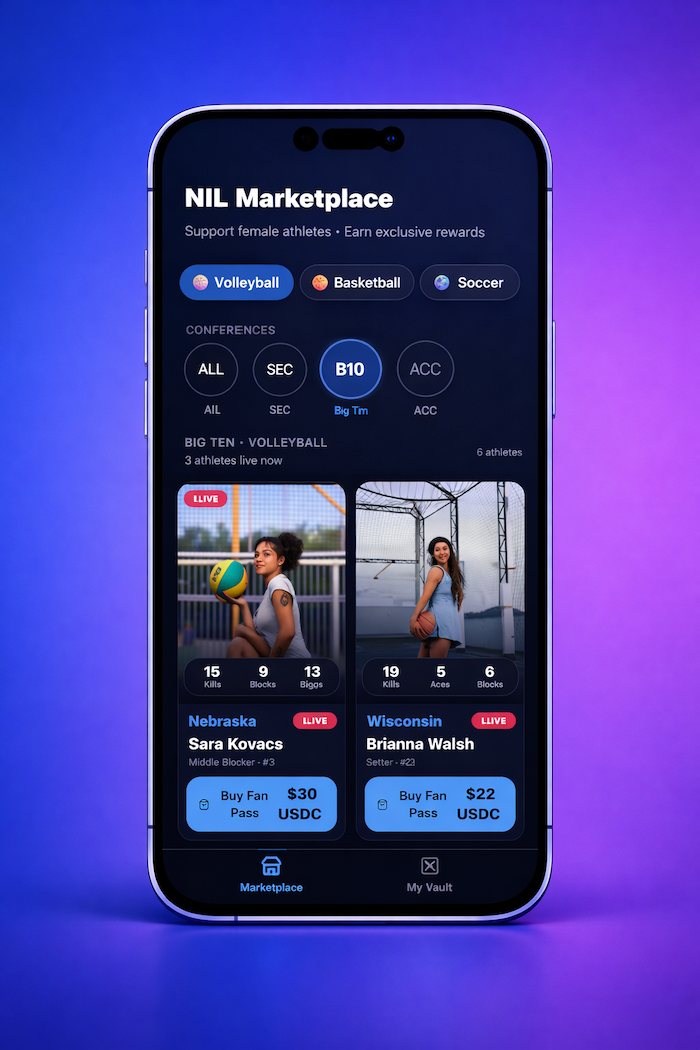

How ND Labs turned Fan Passes, athlete discovery, Vault ownership, and squad-based rewards into a mobile-first NIL marketplace experience for women’s collegiate sports.
The NIL economy has changed how college athletes, brands, fans, universities, and communities interact.
Since student-athletes gained the ability to monetize their name, image, and likeness, the market has moved from basic sponsorship matching toward more advanced digital platforms. Today, a NIL marketplace can help athletes become discoverable, connect with brands, receive fan support, sell digital products, unlock community experiences, and build long-term monetization channels.
But the next product question is not only how athletes get paid.
How do you turn one-time NIL support into a repeatable fan engagement experience?
That was the core idea behind the NIL Marketplace prototype designed by ND Labs — a mobile-first sports fintech concept for women’s collegiate sports. The product explores how fans can discover athletes, purchase Fan Passes, unlock exclusive content, store passes in a personal Vault, and build squads to earn loyalty rewards.
In other words, the prototype was not designed as a simple digital collectibles marketplace. It was designed as a fan economy.
You can view the full visual case study here: NIL Marketplace Case Study by ND Labs.
A NIL marketplace is a digital platform where college athletes can monetize their name, image, and likeness by connecting with brands, fans, businesses, donors, universities, collectives, and other partners.
In a traditional NIL marketplace, athletes may create profiles, showcase their audience, list available opportunities, receive sponsorship requests, sell merchandise, book appearances, or participate in paid content campaigns.
In a fan-driven NIL marketplace, the model can go further. Fans may be able to support athletes directly through digital products, memberships, personalized content, community access, exclusive experiences, collectibles, or Fan Passes.
The strongest NIL marketplaces do more than process transactions. They help athletes build lasting relationships with supporters and give fans a reason to return after the first purchase.
Most NIL marketplaces are built around a multi-sided ecosystem. Athletes need visibility and monetization tools. Brands and businesses need ways to discover relevant athletes. Fans need simple ways to support players they care about. Universities, collectives, agencies, and sports management teams may also need workflows for compliance, communication, reporting, and opportunity management.
A typical NIL marketplace experience can include:
This last step is where many NIL products still have room to evolve. Discovery and payments are important, but long-term value comes from retention.
A NIL marketplace and a NIL collective can both help athletes access monetization opportunities, but they are not the same thing.
A NIL marketplace is usually a technology platform. It helps athletes become discoverable and enables transactions between athletes and brands, fans, businesses, donors, universities, or other partners.
A NIL collective is typically an organization or supporter group that helps coordinate, fund, or facilitate NIL opportunities for athletes, often around a specific school, team, donor network, or athletic program.
The two models can overlap. A collective may use marketplace technology. A marketplace may serve collectives, universities, agencies, and fan communities. But from a product perspective, the distinction matters:
A modern NIL platform may need to support both sides: the transaction layer of a marketplace and the community layer of a collective.
A NIL marketplace can serve multiple sides of the college sports ecosystem:
This multi-sided nature makes NIL marketplace design more complex than a standard ecommerce product. The product has to work for athletes, fans, brands, and operators at the same time.
A strong NIL marketplace needs more than a directory of athlete profiles. It needs to support discovery, trust, monetization, fulfillment, compliance, and repeat engagement.
Core product features can include:
The most competitive NIL platforms will not be defined only by how many athletes they list. They will be defined by how well they convert attention into support, and support into long-term engagement.
Web3 does not need to be the center of every NIL marketplace. Many NIL products can work without blockchain. But in some marketplace models, Web3 can support a valuable product layer: ownership, access, persistence, rewards, and digital fan identity.
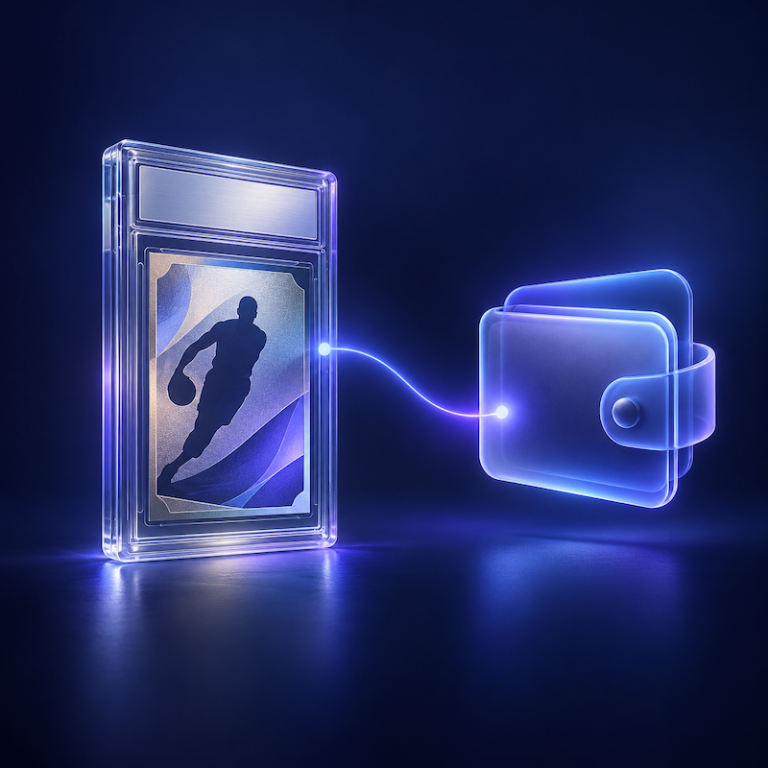
For a NIL marketplace, this can include Fan Pass ownership, token-gated content, rare cards, digital collectibles, transparent rewards, USDC payments, or a persistent Vault where fans manage what they own and unlock what comes next.
The important product principle is that blockchain should not make the fan experience more complicated. Most users do not want to think about wallets, chains, or tokens. They want to support athletes, unlock value, and feel closer to the teams and players they care about.
The best Web3 layer for a NIL marketplace will not feel like crypto. It will feel like a better fan experience.
For a deeper breakdown of digital passes, branded rewards, embedded wallets, token-gated access, and compliance-ready Web3 infrastructure, read our guide to Web3 for NIL platforms and fan engagement.
Many NIL products start with the same assumption: if fans care about athletes, they will support them financially.
That is true, but it is incomplete.
A successful NIL marketplace needs more than a payment button. It needs to answer several product questions at once:
This is especially important in mobile sports fintech products, where the experience needs to feel fast, credible, emotional, and easy to understand.
For the NIL Marketplace concept, ND Labs approached the challenge as a full product loop:
Discover → Evaluate → Buy → Unlock → Retain
This structure helped transform NIL support from a single transaction into a repeatable fan engagement journey.
To explore what a next-generation NIL marketplace could look like, ND Labs designed a high-fidelity mobile prototype for women’s collegiate sports.
The concept focused on volleyball, basketball, and soccer — sports with highly engaged fan communities, strong visual storytelling potential, and growing attention across the college sports ecosystem.
The prototype demonstrates how fans can discover female college athletes, evaluate performance, buy Fan Passes, unlock exclusive content, and continue engaging through Vault ownership and squad-based loyalty rewards.
The product was designed not as a static marketplace, but as a fan economy: a system where support becomes ownership, ownership unlocks access, and access creates reasons to return.
Explore the full visual case study here: NIL Marketplace Case Study by ND Labs.
A marketplace is only as strong as the journey it creates.
For this prototype, ND Labs designed the product around a five-stage fan conversion funnel:
This journey became the foundation of the product experience. It also helped define what the prototype needed to prove: not just that a Fan Pass could be purchased, but that it could become the starting point for long-term engagement.
The first step in any NIL marketplace is discovery.
Fans need a fast way to browse athletes, understand who they are, and decide who they want to support.
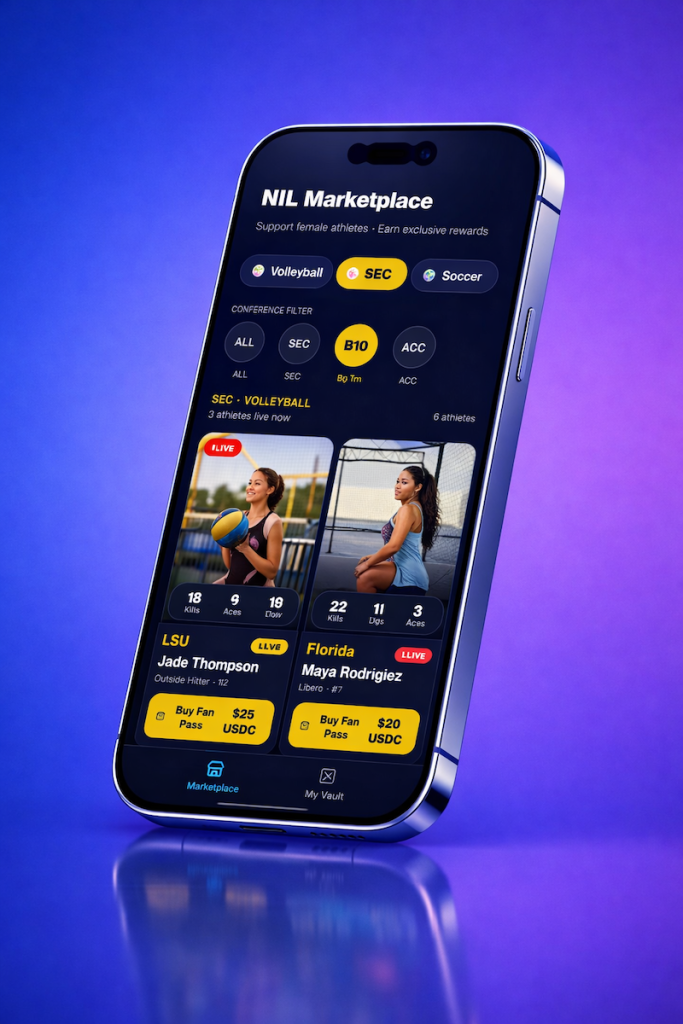
In the NIL Marketplace prototype, discovery is built around three core filters:
Each athlete card is designed as a compact conversion unit. It combines visual appeal, sports credibility, and purchase intent in one mobile interface.
Instead of forcing users to open a detailed profile immediately, the card gives fans enough context to make a quick first decision:
This matters because mobile marketplace design is often about reducing hesitation. The user should not need to work hard to understand what is being offered.
For a NIL marketplace, the athlete card becomes the equivalent of a product card, but with more emotional weight. It is not just selling an item. It is introducing a person, a story, and a potential fan relationship.
After discovery, fans need more context.
A strong NIL platform should not treat athletes as static profile images. Fans want to understand performance, personality, and access.
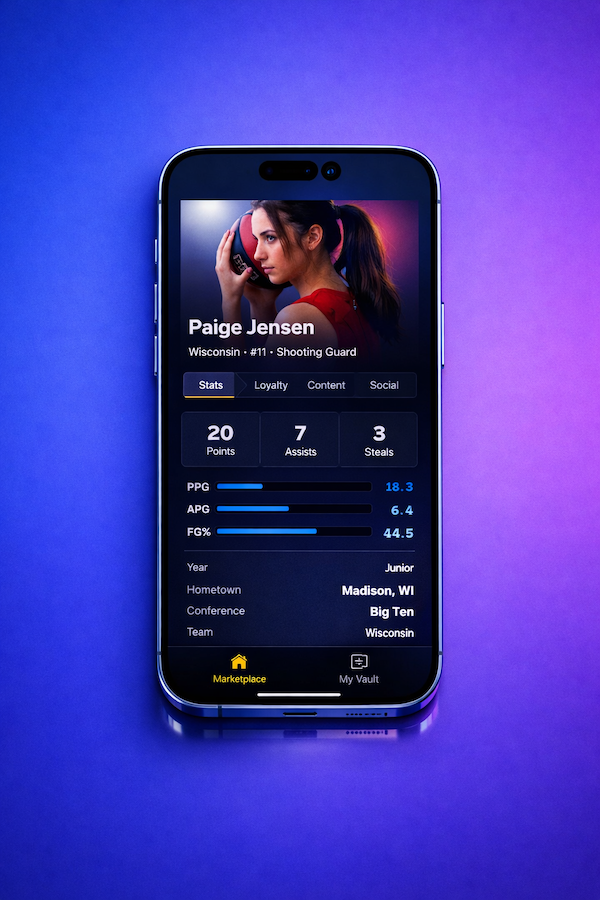
That is why the prototype includes athlete profile screens with tabs for:
The stats experience gives fans a clearer picture of the athlete’s performance. Depending on the sport, profiles can show metrics like points, assists, steals, goals, blocks, digs, aces, conference rank, team, hometown, position, and supporter count.
This helps shift the purchase decision from impulse to informed support.
Fans do not just buy images. They invest in performance, access, and potential.
For a women’s collegiate sports NIL marketplace, this distinction is important. The product should not feel like a generic collectibles app with athlete photos attached. It should feel like a sports-native experience where performance and identity matter.
The transaction flow is one of the most sensitive moments in a sports fintech product.
If checkout feels confusing, too technical, or too long, users drop off.
For the NIL Marketplace prototype, ND Labs designed a purchase flow around a tactile Slide to Buy interaction. This pattern makes the payment moment feel intentional and mobile-native.
The purchase experience was designed to support:
This is especially relevant for fintech or blockchain-enabled products. Users should not feel overwhelmed by infrastructure. The payment experience should feel simple and understandable, even if the underlying product includes digital ownership, USDC payments, or blockchain persistence.
The key UX principle is this:
The more complex the financial infrastructure, the simpler the user experience needs to feel.
A Fan Pass needs a reason to matter after purchase.
Without utility, digital ownership can feel abstract. With utility, a Fan Pass becomes an access layer.
In the NIL Marketplace prototype, Fan Pass holders can unlock:
This utility model turns a Fan Pass into more than a collectible. It becomes a gateway into the athlete’s supporter ecosystem.
A fan may purchase once to support an athlete. But they return when the product gives them something to do, watch, unlock, manage, or participate in.
This is where the NIL Marketplace moves from transaction to relationship.
Most marketplaces focus heavily on the purchase.
But in many products, the real retention opportunity begins after checkout.
The NIL Marketplace prototype uses My Vault as the post-purchase home for every Fan Pass. Once a fan buys a pass, it is stored in the Vault, where it can be viewed, managed, and used inside the loyalty system.
The Vault creates a persistent ownership layer. Instead of disappearing after the transaction, each Fan Pass remains visible and useful. Fans can return to their collected passes, access athlete content, and assign athletes into squads.
This solves a common marketplace problem: users often have little reason to come back after they buy.
With My Vault, the product gives users a reason to return. They are not just buyers. They are collectors, supporters, and participants in a loyalty system.
One of the most important retention mechanics in the prototype is Build Your Squad.
The idea is straightforward: fans can add 3–5 athletes from their Vault to create a squad. Same-conference squads can unlock loyalty bonuses, with the prototype referencing up to +25% loyalty rewards.
This mechanic adds a game layer to the NIL marketplace.
It encourages fans to:
This is where conference identity becomes more than a filter.
In the discovery experience, conferences help users browse. In the visual system, conferences create identity. In the loyalty system, conferences become a retention mechanic.
That is a powerful product design pattern.
Instead of treating sports fandom as a design theme, the prototype uses it as a behavioral driver.
The strongest version of a NIL marketplace is not a storefront. It is a flywheel.
The prototype’s flywheel works like this:
This creates value on both sides of the platform.
Athletes get more direct monetization opportunities. Fans get recognition, access, and participation. The platform benefits from repeat engagement, collection behavior, and network effects.
This is the shift from a transactional NIL marketplace to a loyalty-driven sports fintech product.
A successful NIL marketplace should not stop at checkout. To create long-term value, the product needs to combine commerce, content, ownership, and retention.
Athlete cards should combine identity, imagery, stats, and pricing.
Fans need context before they support an athlete.
This is especially important when the product includes USDC payments or Web3 infrastructure.
Content, community, perks, and rewards make ownership meaningful.
The Vault turns a one-time purchase into a persistent relationship.
Squads, conferences, teams, and fan affiliation can drive repeat engagement.
A NIL marketplace is a digital platform where college athletes can monetize their name, image, and likeness by connecting with brands, fans, businesses, donors, universities, or other partners. Depending on the platform, athletes may receive sponsorship requests, sell merchandise, offer appearances, publish content, or create fan-driven products such as memberships or Fan Passes.
A NIL marketplace usually works by helping athletes create profiles, making those athletes discoverable to brands or fans, enabling a deal or purchase flow, supporting payment or communication, and helping fulfill the opportunity. More advanced marketplaces can also include content access, community features, loyalty programs, or analytics.
A NIL marketplace is typically a technology platform for discovery and transactions. A NIL collective is usually a supporter group or organization that helps fund, coordinate, or facilitate NIL opportunities for athletes. Some products may serve both marketplaces and collectives.
NIL money can come from brands, local businesses, donors, fans, collectives, sponsors, or other partners. In fan-driven models, fans may support athletes directly through digital products, merchandise, content, memberships, or access-based experiences.
A modern NIL marketplace should include athlete discovery, searchable profiles, trust signals, deal or purchase flows, payment support, content or perk delivery, compliance-aware workflows, fan engagement features, retention mechanics, analytics, and a strong mobile experience.
Yes. Web3 can support digital ownership, token-gated content, transparent rewards, collectible Fan Passes, rare cards, USDC payments, and persistent fan identity. The strongest Web3 implementations should feel simple to fans and operate as infrastructure behind a clear product experience.
A loyalty loop helps turn one-time support into repeat engagement. If a fan buys a Fan Pass and then receives access to content, community, rewards, or squad-based benefits, they have a stronger reason to return and continue supporting athletes over time.
The NIL economy is still evolving, but one thing is clear: the next generation of NIL platforms will need stronger product experiences.
Fans will expect more than payment links. Athletes will need better tools for monetization and community. Marketplaces will need retention systems that create long-term engagement.
At ND Labs, we help teams turn complex marketplace, fintech, and Web3 ideas into high-fidelity prototypes that are ready for demos, fundraising, validation, and development planning.
If you are building a NIL marketplace, sports fintech app, fan engagement platform, or athlete monetization product, we can help you design the full product journey from first interaction to long-term retention.